

Yo, folks! As a supplier of fiber desiccant, I often get asked this question: "Is fiber desiccant biodegradable?" It's a great question, especially in today's world where we're all becoming more environmentally conscious. So, let's dive right into it and find out.
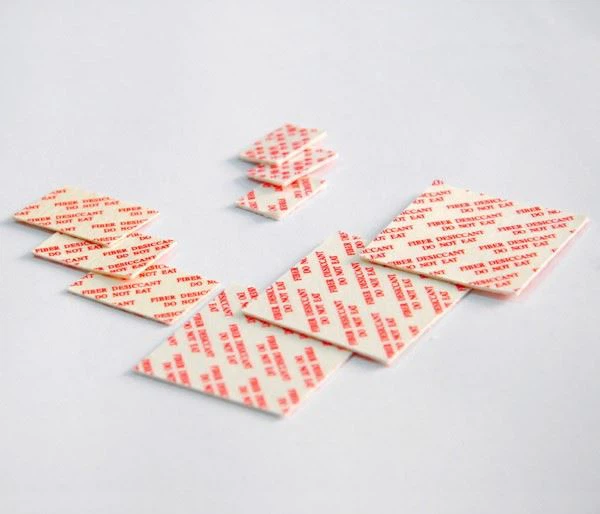
First off, let me give you a bit of background on fiber desiccant. Fiber desiccant is a type of drying agent that's used to absorb moisture and prevent the growth of mold, mildew, and rust. It's commonly used in packaging to protect products during storage and transportation. We have different types of fiber desiccants like Natural Fibre Desiccant, Natural Plant Fiber Desiccant, and Natural Fiber Desiccant.
Now, let's talk about biodegradability. Biodegradability refers to the ability of a material to break down into natural substances by the action of microorganisms like bacteria and fungi over time. If a material is biodegradable, it means that it won't stick around in the environment for ages and cause pollution.
So, is fiber desiccant biodegradable? The answer is: it depends. Many of the fiber desiccants on the market today, especially those made from natural materials, are biodegradable.
Most of the natural fiber desiccants are derived from plant fibers. These plant - based fibers are organic in nature. For example, some are made from bamboo fibers, which are known for their rapid growth and high sustainability. Bacteria and other microorganisms in the soil can easily break down bamboo fibers. They start to munch on the fibers, breaking them into simpler compounds like carbon dioxide, water, and humus. This process is a natural part of the ecosystem's recycling system.
Similarly, desiccants made from other natural plant fibers such as cotton or wood pulp are also biodegradable. Cotton is a well - known natural material that decomposes relatively quickly in the right environmental conditions. Wood pulp, which is often used in the production of paper - like fiber desiccants, is also broken down by microbes. When these desiccants end up in a landfill or compost, they'll start to degrade in a matter of months to a few years, depending on the conditions.
But here's the thing, not all fiber desiccants are 100% biodegradable. Some fiber desiccants might be treated with additives or chemicals to enhance their performance, such as increasing their moisture - absorption capacity or improving their durability. These additives can sometimes slow down or even prevent the biodegradation process. For example, if a fiber desiccant has a coating that's made from a synthetic polymer, that polymer might not be biodegradable. The microbes in the environment won't be able to break it down easily, and it could stay in the environment for a long time.
As a supplier, we're really conscious about this. We strive to offer fiber desiccants that are as eco - friendly as possible. Our Natural Fibre Desiccant and Natural Plant Fiber Desiccant are made with minimal use of non - biodegradable additives. We believe that it's important to balance the performance of the desiccant with its environmental impact.
So, if you're concerned about the environmental footprint of the desiccants you're using, there are a few things you can look out for. First, check the product description. If it says it's made from natural plant fibers and has little to no chemical additives, it's likely to be biodegradable. You can also ask the supplier, like us, for more information about the material and its biodegradability.
Another factor to consider is the disposal method. Even if a fiber desiccant is biodegradable, the way you dispose of it can affect how quickly it breaks down. For instance, if you throw it in a sealed plastic bag and then into the trash, it won't have access to the oxygen, moisture, and microorganisms it needs to decompose. On the other hand, if you put it in a compost bin, where there's a good mix of organic matter, air, and moisture, the decomposition process will be much faster.
Now, let's talk about why the biodegradability of fiber desiccant matters. In today's market, more and more consumers and businesses are looking for sustainable products. By using biodegradable fiber desiccant, you're not only protecting your products from moisture damage but also doing your part for the environment. It can enhance your brand image as an environmentally - responsible company.
Moreover, with stricter environmental regulations being introduced around the world, using biodegradable products can help you stay compliant. You won't have to worry about potential fines or negative publicity related to environmental pollution.
As a supplier, we've seen a growing demand for biodegradable fiber desiccants. Our customers are increasingly interested in products that are both effective and eco - friendly. We're constantly working on improving our products to meet these demands. We're researching new ways to use natural materials and reduce the use of non - biodegradable additives without sacrificing the desiccant's performance.
If you're in the market for fiber desiccant, whether you're a small business looking to protect your products during shipping or a large corporation with strict environmental policies, we've got you covered. Our Natural Fiber Desiccant range offers a great balance of performance and sustainability.
So, if you're interested in learning more about our fiber desiccants, or if you want to discuss your specific needs, don't hesitate to reach out. We'd love to have a chat and see how we can help you with your moisture - control requirements.

In conclusion, while not all fiber desiccants are biodegradable, there are many options available in the market that are. By choosing biodegradable fiber desiccants, you can make a positive impact on the environment while still getting the moisture - protection you need. So, take a step towards sustainability and consider using our high - quality fiber desiccants.
References
- Textbooks on environmental science related to biodegradation of organic materials
- Industry reports on sustainable packaging materials
- Research papers on the development of natural fiber - based desiccants